Your browser is not supported for this experience.
We recommend using Chrome, Firefox, Edge, or Safari.
1 / 1
The city lies on some of the most fossil-rich land in the world, which means finding a piece of prehistoric history is as easy as walking your dog. Just ask a guy in Littleton—that’s how he found parts of a T. rex. Here’s a look at the Denver area’s dinosaurs.
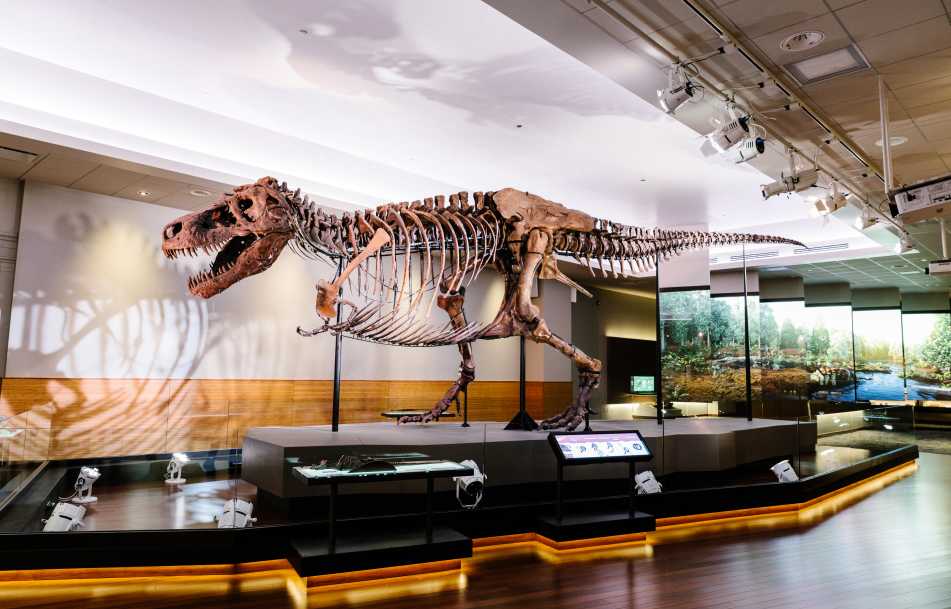
What to See: Located in City Park next to the Denver Zoo Conservation Alliance, it's one of the country's premier natural history museums. The museum has close to 115,000 dinosaur, plant and mammal fossils in its collections. You can see the museum's staff at work in the Fossil Prep Lab.
Major Discoveries: In January 2025, the museum made a significant fossil find under its own parking lot. The museum was conducting a geothermal test drilling project to assess the viability of transitioning from natural gas to geothermal energy, and took the opportunity to conduct some scientific research of the Denver Basin. That led to the discovery of the nearly 70 million-year-old partial-bone fossil located 763 feet below the surface. It's the deepest and oldest fossil ever found within city limits and is on display in the Discovering Teen Rex exhibition.
The exhibition also showcases a juvenile T. rex fossil that was discovered by a family hiking in North Dakota's Badlands in 2022. Only a handful of these skeletons have been found and this is your opportunity to see one on display.
Some other highlights of note at the museum, as part of the Prehistoric Journey exhibit, feature a Stegosaurus fossil discovered near Cañon City by a high school teacher and an Allosaurus skeleton found by a 13-year-old girl in Moffat County.
Good to Know: The museum's Infinity Theater features the latest IMAX 3D films about the natural world in enthralling detail. The museum is open daily but closed on major holidays.
Denver Museum of Nature & Science
Dinosaur Ridge
What to See: This natural landmark is located along the Front Range near Morrison, Colorado, about a 20-minute drive from Denver.
Major Discoveries: It features famous Jurassic dinosaur bones, such as Stegosaurus and Apatosaurus, discovered in 1877, and Cretaceous dinosaur footprints.
Good to Know: A paid guided bus tour is the most popular way to see the site. You can also do a guided or self-guided (free) walking tour or join a small group and walk with a geologist. There are lots of activities for kids at the Visitor Center. You can buy a discounted pass to visit both Dinosaur Ridge and the Morrison Natural History Museum. Dinosaur Ridge is open daily except on major holidays and during severe weather.
What to See: Only about 25 minutes from Denver, this museum should not be overlooked. It will give you a broader view of Earth science along with some unique fossil finds. With more than 40,000 items in its collection, the museum often rotates exhibits.
Major Discoveries: The museum houses a rare lizard fossil with "extremely well-preserved skin." The museum believes it was found along the Utah-Colorado border during a school field trip in the early 1950s.
Good to Know: The museum has an indoor cave with minerals that glow and a geology hiking trail featuring Triceratops tracks. Earn a free rock or mineral by participating in a family-friendly scavenger hunt. Admission is free, and the museum is open daily, except on major holidays.
What to See: Get a glimpse of early dinosaur discoveries from Colorado, including fossils from the first Stegosaurus and Apatosaurus ever found. Located 25 minutes west of Denver, the 3,000-square-foot exhibition offers a relaxed environment that is perfect for kids of all ages to explore rocks and fossils.
Major Discoveries: Local excavations have yielded famous baby dinosaur footprints that were featured in Smithsonian magazine and media outlets around the world.
Good to Know: The exhibits and guides connect visitors with the ancient story of the Front Range. The museum is open daily but closed on major holidays.
What to See: This museum, located in Boulder, about 35 minutes from Denver, boasts a collection of more than 300,000 cataloged fossil specimens gathered from around the world.
Major Discoveries: The museum's Paleontology Section houses five growing fossil collections covering invertebrates, vertebrates, plants, eggshells and tracks.
Good to Know: The museum is open seven days a week but closed on major university holidays. Admission is free, and donations are accepted.
What to See: About two hours from Denver in central Colorado, this fascinating monument is a portion of an ancient lakebed that has preserved almost in its entirety an ecosystem that existed 34 million years ago. It's one of the richest fossil deposits in the world.
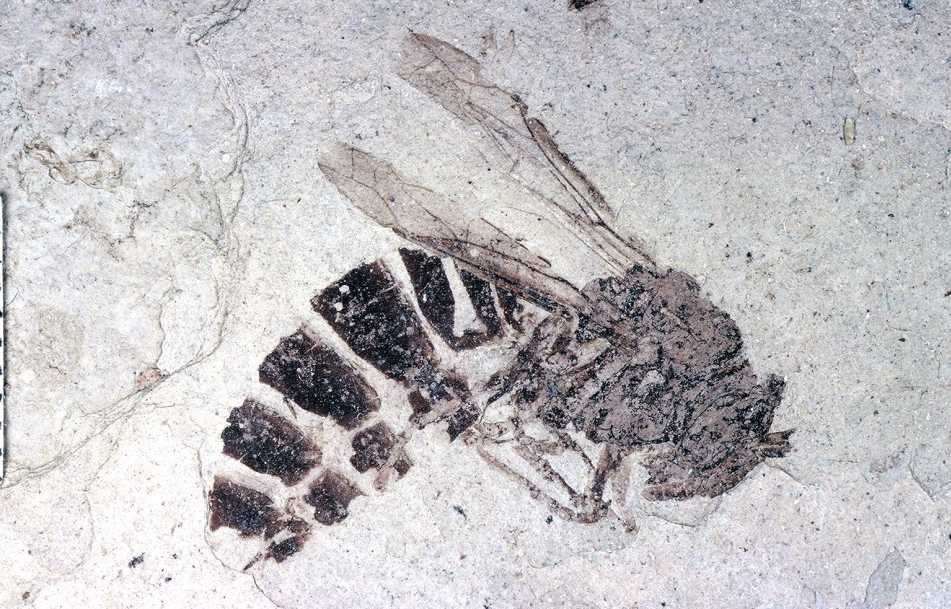
Major Discoveries: Leaf, insect, birds, mammals and seed fossils can be found throughout the 6,000-acre site.
Good to Know: The Petrified Forest Loop is a one-mile trail that passes massive, petrified redwood stumps, a historic excavation site and a geologic timeline exhibit. There are many other hiking trails as well. It's open year-round, but the hours vary depending on the season. It's closed on major holidays.
Florissant Fossil Beds National Monument
While these are not major dinosaur attractions per se, they do hint at the prehistoric past. Keep your eyes peeled. You never know when the next major discovery might happen!
On the Denver Trolley, enjoy a trip back in time — one that could be further than you expected. Lakewood Gulch, which is part of the Platte Valley Trolley route, is also home to the site of the first Triceratops fossil ever found. In 1887, it was misidentified as an extinct bison, but it was later discovered to be the horns of one of the world's most popular dinosaurs. The trolley runs from late spring to late summer. Check the website for current fares. Pickup is right next to the REI Flagship Store.
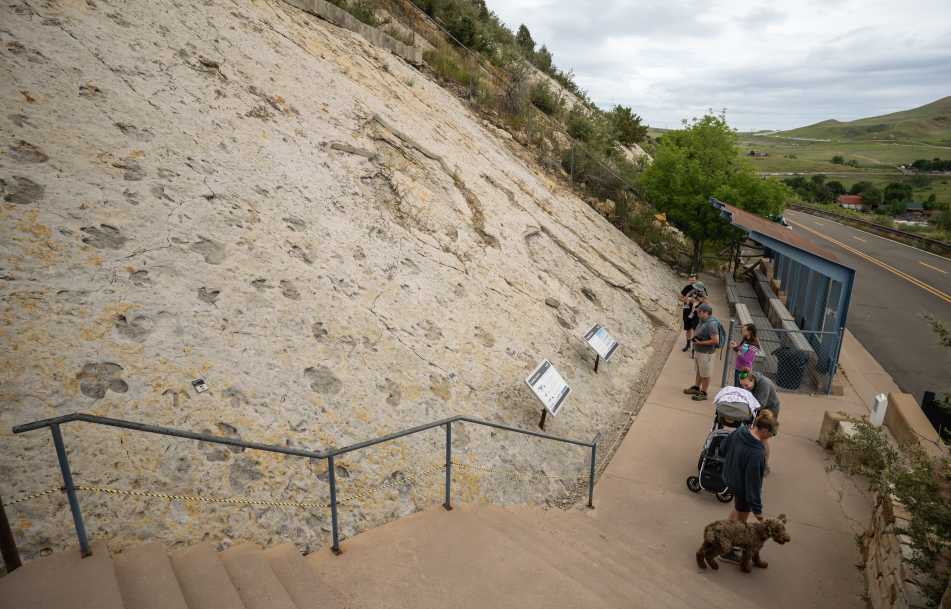
Stand exactly where a dinosaur stood 68 million years ago! This half-mile hiking trail is full of trace fossils, which are the footprints and marks made by animals walking or crawling. To get to the trail, park in the lot west of the Ford dealership on 19th Street, just east of U.S. Highway 6 in Golden, then take the bike path west and follow the trail south for about a quarter-mile.
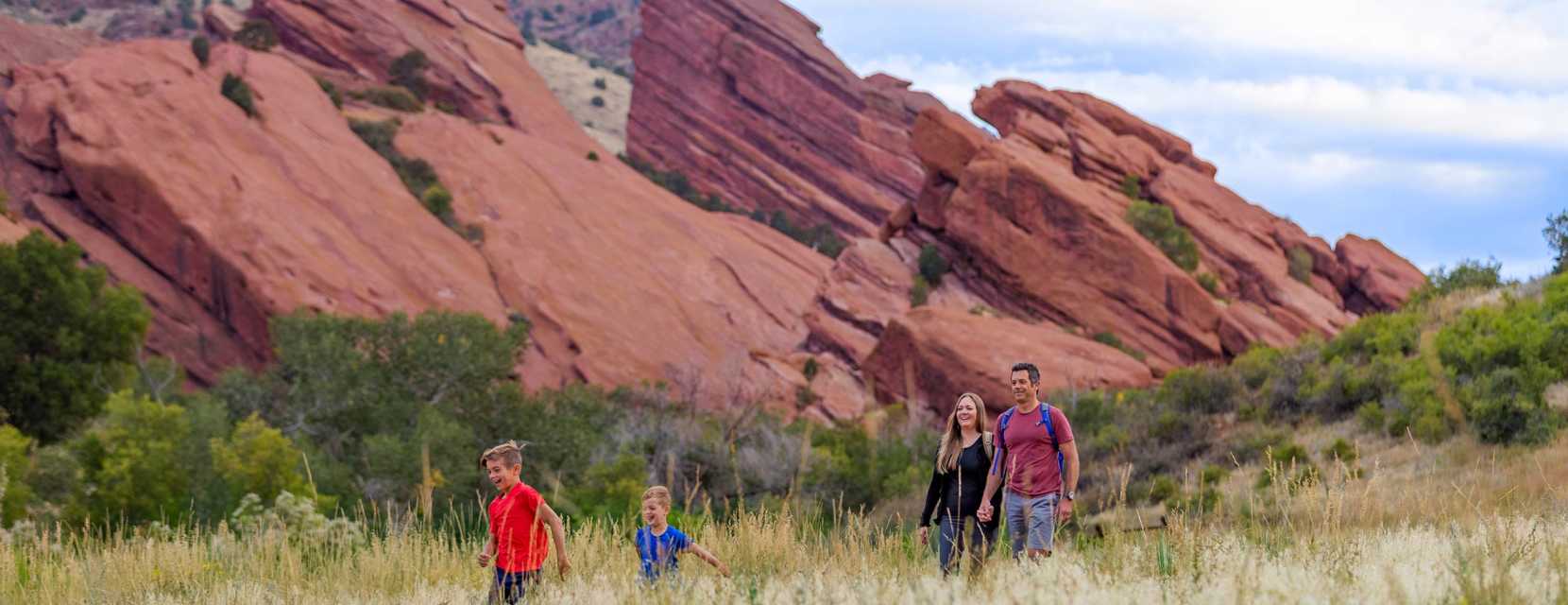
A picture-perfect setting with flawless, all-natural acoustics, Red Rocks Park & Amphitheatre is a Colorado original. While it may be known first and foremost as a music venue, Red Rocks also has a prehistoric connection. In 1877, Stegosaurus, the Colorado state fossil, was found near Morrison, Colorado, which is the home of Red Rocks, while nearby dinosaur tracks also tell of the Jurassic Period. Also, fossil fragments of the giant 40-foot plesiosaur, the marine reptile mossaur and flying reptiles captivate both students and scientists. Go for a hike on the park's gorgeous trails.
Owned by the City of Golden, Fossil Trace Golf Club is not only a great place to get in a challenging round but also a unique way to spot prehistoric history. Triceratops footprints, as well as other fossils, can be seen adjacent to the 12th green. Also, inside the main doors of the clubhouse, there is an exhibit that gives information about the tracks and fossils uncovered on the site. For the non-golfing crowd, the footprints can be accessed at the corner of 6th Avenue and 19th Street.
There's a story behind everything — including the mascot for the Colorado Rockies. In 1994, construction crews turned up an unidentifiable rib fragment of a dinosaur near the home plate during excavation for Coors Field. The discovery led to the invention of the world's second purple dinosaur, Dinger, the beloved mascot for the Rockies.
How about a cold one (or three)? And while you're enjoying those frosty beverages, take a look out the window of Coors Brewery and you'll see the spot where parts of a Triceratops skeleton were excavated on North Table Mountain. Coors provides self-guided tours for guests 21+ with a valid ID.