


The Kirkland at the Denver Art Museum in the Golden Triangle Creative District is unlike any other museum in Denver. Part art museum, part design museum and part artist’s studio, the institution brings together more than 150 years of fine and decorative art in densely layered, salon-style galleries where paintings, furniture, ceramics, glass and textiles share the same space. The result feels less like walking through a traditional museum and more like stepping into a beautifully curated collector’s home.
At the heart of it all is Colorado’s most influential modern painter, Vance Kirkland. Often called the “Father of Modern Colorado Painting,” Kirkland spent more than five decades pushing artistic boundaries while helping shape Denver’s creative community. The museum preserves his original 1911 studio — carefully relocated to the campus in 2016 and left just as he used it.
Inside, you’ll discover just how unconventional Kirkland was. He suspended himself from straps to paint while lying face down so his signature paint dots wouldn’t run. He mixed pigments with everything from antifreeze to alcohol in baby food jars and even used a skateboard to glide around large canvases as he worked.
His inventive spirit carries throughout the museum, where more than 1,400 pieces of decorative art are displayed alongside his paintings. Here are a few favorites.
Must-Sees at the Kirkland
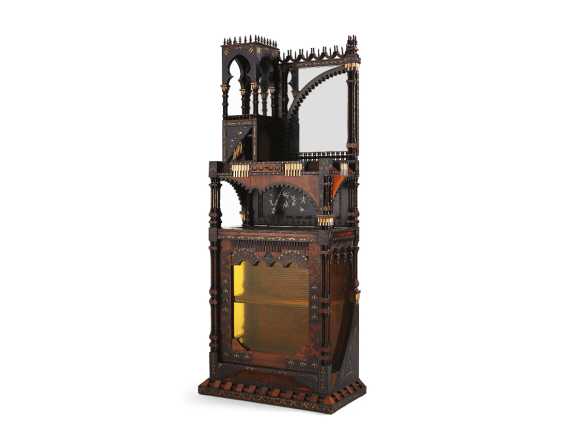
Carlo Bugatti Cabinet
Before the Bugatti name became synonymous with luxury sports cars, Carlo Bugatti was turning heads with equally bold furniture designs. The Italian designer’s extraordinary Arts & Crafts cabinet at the Kirkland is a feast for the eyes, combining mahogany, brass, mirrored and colored glass, copper, bone, silk and even veneered wool into one remarkably intricate piece. Drawing inspiration from Asian, African and Middle Eastern design traditions, it’s one of the museum’s most unforgettable works.
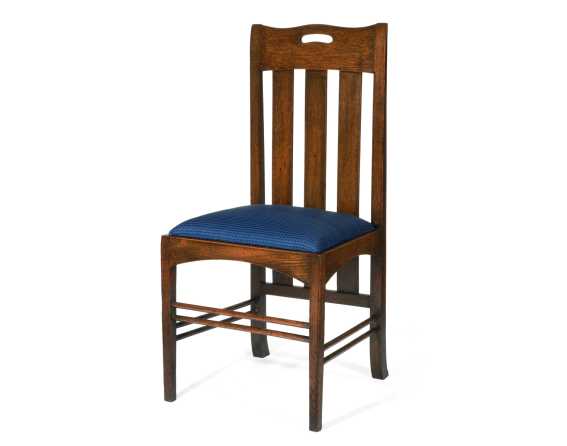
Charles Rennie Mackintosh's Chairs
With their impossibly tall backs and striking geometric lines, Charles Rennie Mackintosh’s tearoom chairs are as much sculpture as furniture. The Scottish architect designed them specifically for the elegant tearooms he created in Glasgow around the turn of the 20th century, producing only enough chairs to furnish each space. That’s what makes the Kirkland’s trio so special.
Pawel Kontny's Marble Dust Paintings
At first glance, Polish artist Pawel Kontny’s paintings look like richly textured landscapes. Look more closely, and you’ll discover that the Denver artist sculpted their surfaces with a paste of marble dust before layering translucent oil glazes on top. To achieve just the right texture, he famously sifted the marble dust through his wife’s pantyhose. The Kirkland displays two standout examples of Kontny’s inventive technique — one depicting the Grand Canyon and another from his "Cosmos" series, inspired by the 1969 Moon landing.
Vance Kirkland's Space Paintings
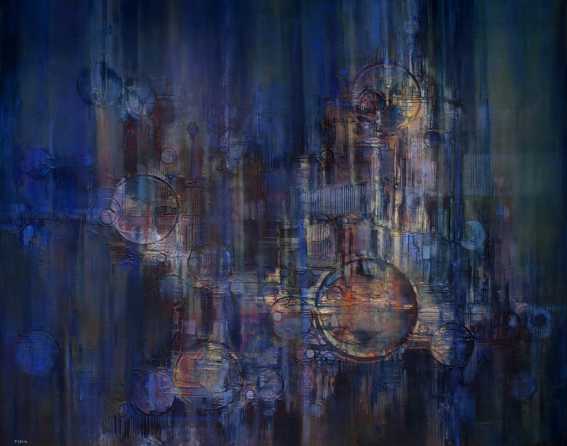
The museum has several pieces from Kirkland's celebrated science-fiction/space series, which reflect the artist's fascination with the origins of the universe and cosmic phenomena that occurred billions of years before the Earth was formed. Look for "The Energy of Explosion of the Sun Sixty Billion Years B. C.," a massive masterpiece (75 by 100 inches) crafted using Kirkland's signature technique combining oil paint, water and often overlaid gold particles or dots on linen.
Frank Lloyd Wright's 'Peacock Chair'
With its soaring back and bold geometric design, Frank Lloyd Wright’s Peacock Chair is one of the most distinctive furniture designs associated with Wright’s architectural vision. Designed in 1921 for Tokyo’s Imperial Hotel, the chair reflects Wright’s belief that furniture should be as thoughtfully designed as the buildings themselves. Rather than serving as decoration, it was created to echo the hotel’s architecture, making it a striking example of his philosophy that form and function should work together.
Elizabeth Yanish 'Shwayder's Wings of Gold (#2)'
Elizabeth Yanish Shwayder’s "Wings of Gold (#2)" is one of the Kirkland’s most captivating sculptures. Created around 1965, the monumental work appears to float on a single slender rod, its bronze-coated steel forms evoking a pair of soaring wings. Inspired by the winged insignia on her son’s navy pilot uniform, the sculpture blends a deeply personal story with the bold, industrial aesthetic of midcentury American art. At a time when large-scale metal sculpture was dominated by men, Shwayder taught herself to weld and earned recognition for her fearless approach to working with steel.