


Denver played a critical role in the development of the Beat Generation. More than half a century after the publication of Jack Kerouac's era-defining novel, "On the Road," the taboo-shattering exploits of a group of writers remain as cool as ever. Here's how you can walk in their footsteps.
Here I was in Denver…I stumbled along with the most wicked grin of joy in the world, among the bums and beat cowboys of Larimer Street.
— Jack Kerouac, "On the Road"
A Brief History of the Beat Legacy
The Beat Generation, a term coined by Kerouac, was a cultural movement built on freedom from a rigid post-war America. They rejected materialism and conventional literary forms while embracing Eastern religions and the spontaneity of jazz music.
Neal Cassady, Jack Kerouac and Allen Ginsberg spent many formative years knocking around Denver back when it was a much different city. Cassady attended East High School, where, despite ongoing brushes with the law, he was mentored by an educator, Justin Brierly, who changed his life. Cassady inspired the character Dean Moriarty in Kerouac's "On the Road." In addition to their old haunts listed below, the trio spent time at the Colburn Hotel during the summer of 1947. It's now listed on the National Register of Historic Places and presently serves as an apartment building.
Factual Note: It's an urban legend that Cassady was buried in nearby Wheat Ridge. Cassady was reportedly cremated, and the Mount Olivet Catholic Cemetery is actually the location of his father's (Neal Marshall Cassady's) gravesite.
A Literature Lover's Tour
1st Stop: My Brother's Bar
This old-school restaurant and bar is one of the places that has barely changed a lick since Cassady, Kerouac and Ginsberg ate and drank here. If you ask nicely, you can get a Xeroxed copy of the letter Cassady sent to a friend from the Colorado Reformatory, where he was sent for being one of Denver's most notorious teenage car thieves. The ever hard-up Cassady wrote: "I believe I owe [My Brother's] about 3 or 4 dollars. If you happen to be in that vicinity, please drop in and pay it, will you?" The original letter is back by the payphone, framed along with a photo of Kerouac and Cassady.
Recommended Reading: "Jack Kerouac's American Journey" by Paul Maher Jr.
Next Stop: Confluence Park
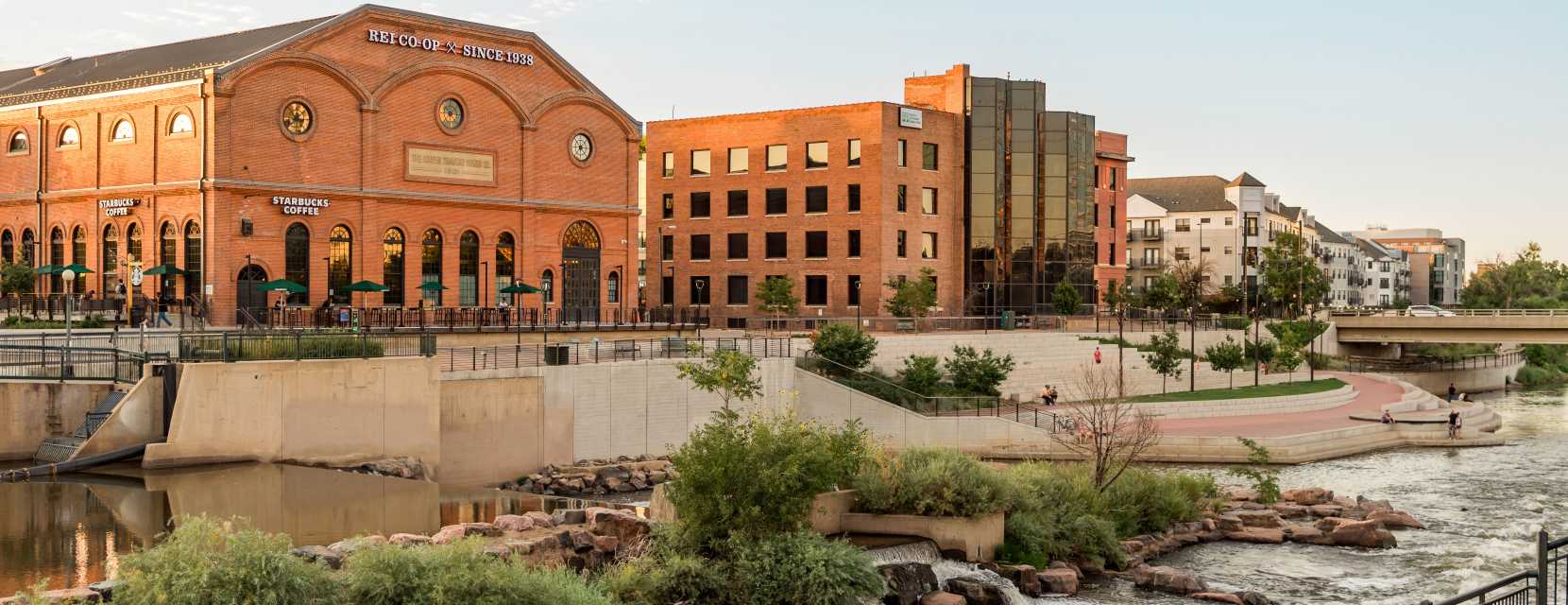
Confluence Park
After you've had a beer and My Brother's famed jalapeno cream-cheese burger (the "JCB"), head to Confluence Park (just a half-block east on 15th Street) where the Platte River and Cherry Creek meet. "Mainly it was the banks of the Platte that provided the flexuous corridor for my travels," Cassady wrote. One architectural landmark Cassady was sure to have known well still stands: the 1901 Denver Tramway building, which has been converted into the REI Flagship Store.
Recommended Reading: "The First Third" by Neal Cassady
Next Stop: Larimer Square & Downtown Denver
"Around the pool halls of Denver during World War II a strange-looking boy began to be noticeable to the characters who frequented the places afternoon and night," wrote Kerouac in "Visions of Cody," his thinly fictionalized portrait of Neal Cassady, the Denver-born hustler who was the spark that set the Beat Generation ablaze. Cassady spent his early life haunting the dives of Larimer Square and living with his wino father at the Metropolitan Hotel, a long-gone spot that Denver historian Tom Noel calls "the fleabag to end all fleabags."
You're not going to find many traces of Larimer Square's seedy side today; it's gone upscale, with some of the city's best restaurants and chicest shops replacing those dark pool halls. But the wonderful Victorian architecture remains. One building to check out is the Daniels & Fisher Tower, also known as the Clock Tower. The 20-story tower was once the tallest structure between the Mississippi River and California, and Allen Ginsberg is reported to have worked at a store at the bottom of the building.
Recommended Reading: "Visions of Cody" by Jack Kerouac
Next Stop: Civic Center Park
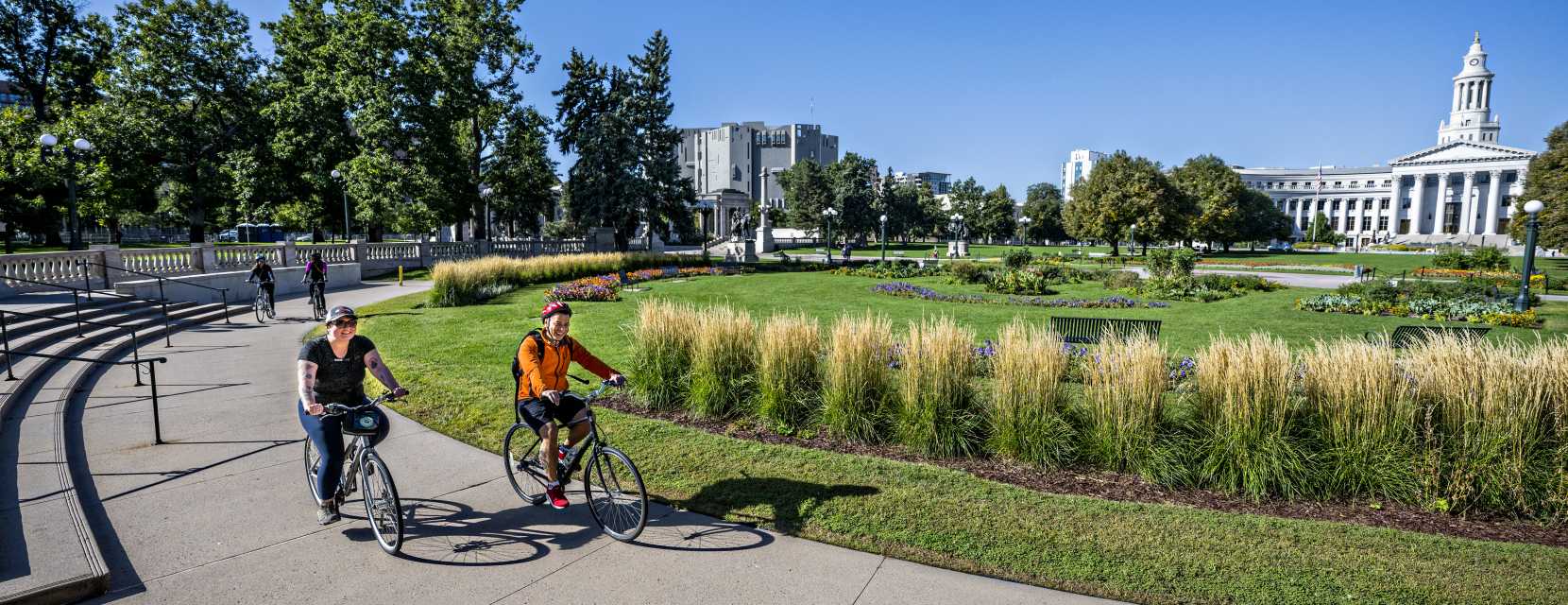
Civic Center Park
"Denver! Denver! we'll return roaring across the City & County Building lawn, which catches the pure emerald flame streaming in the wake of our auto." — Excerpt from "The Green Automobile" by Allen Ginsberg
While we certainly don't recommend driving any sort of automobile across the City & County Building lawn, we do recommend exploring Civic Center Park, a downtown oasis in the shadow of the Colorado State Capitol. The McNichols Building, built in 1909, was the main site of the Denver Public Library from 1909 to 1956. (The library's main branch is now just across the park, which houses lots of resources related to these writers.) Ginsberg would later recall Cassady telling him that he "read all Immanuel Kant" there as a teenager. Today, the McNichols Building has been restored and hosts great art exhibits and other events.
Recommended Reading: "The Visions of the Great Rememberer" by Allen Ginsberg
Next Stop: Tattered Cover Book Store
Located on the eclectic Colfax Avenue, this is a bibliophile's dream come true! We get the feeling the Beats would've loved browsing the thousands of volumes found at the Tattered Cover. Naturally, there is an extensive collection of Beat literature here.
Recommended Reading: "Desolate Angels: Jack Kerouac, The Beat Generation, and America" by Dennis McNally
Next Stop: Sonny Lawson Baseball Field
"It was the Denver Night; all I did was die," Kerouac wrote in "On the Road." The unlikely scene of his despair? Sonny Lawson Baseball Field, a charming little ballpark, which still hosts games, probably not all that different from the ones the author witnessed in 1949. Run the bases yourself — you probably won't feel as depressed as Jack did back then.
Recommended Reading: "On The Road" by Jack Kerouac
Next Stop: Five Points Neighborhood
Jazz was the musical fuel of the Beat Generation — the hotter, the better. And in the 1940s and '50s there was no better place to see the giants of jazz than in Five Points — a historically African American neighborhood just east of downtown that earned the nickname "the Harlem of the West." Welton Street alone was home to more than 50 bars and clubs, where some of the greatest jazz musicians, such as Billie Holiday, Duke Ellington, Miles Davis, Nat King Cole, Count Basie, Dizzy Gillespie and others performed. You can still see live music most nights of the year at Cervantes Masterpiece Ballroom, which is housed in the historic Casino Cabaret, a club where Cassady and Kerouac almost certainly bopped the night away.
Recommended Listening: "Beat Generation Jazz: The Music That Inspired a Revolution," a 2-CD audio compilation by Charles Waring
Denver Day Trip: Hit the Road, Jack!
Allen Ginsberg Library
Head out to Boulder, located 30 miles northwest of Denver, to pay a visit to the Allen Ginsberg Library, located on the Naropa University campus. Ginsberg was a key figure on the Naropa campus in the 1970s and '80s, founding the Jack Kerouac School of Disembodied Poetics with fellow poet Anne Waldman at the university. The library contains rare audio and videotaped recordings of Naropa faculty and visiting faculty, many of whom were associated with the Beat movement. Note: Call ahead to make an appointment.
Recommended Reading: "When I Was Cool: My Life at the Jack Kerouac School" by Sam Kashner
Central City Opera House
The Central City Opera House, located 38 miles west of Denver in the Rocky Mountains, was built in 1878 and Kerouac, a noted Beethoven aficionado, made the pilgrimage to Central City to see Beethoven's "Fidelio" during the summer of 1947. This adventure is recounted in such vivid detail in "On the Road" that one can pretty much still follow in Jack's footsteps. "It was a wonderful night," he wrote. "We approached the lights around the opera house down the narrow dark street; then we took a sharp right and hit some old saloons and swinging doors ... We started off with a few extra-sized beers. There was a player piano. Beyond the back door was a view of the mountainsides in the moonlight. I let out a yahoo. The night was on." The second-oldest annual professional opera festival in the country, Central City continues to make history with three productions each year, including one opera favorite, one American work and one lesser-known piece.
Recommended Listening: "Fidelio" by Beethoven