


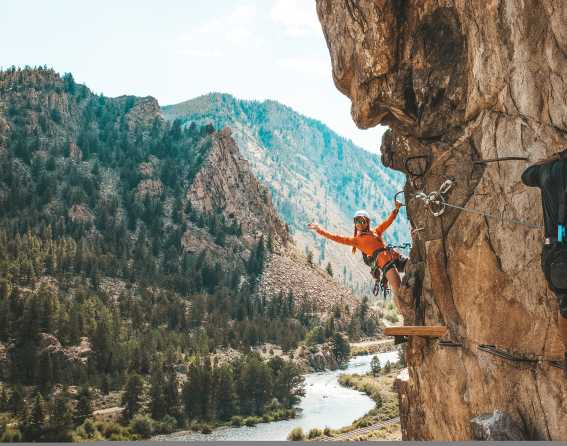
Coloradans are always seeking out the next best adventure. If you’ve already crossed whitewater rafting, rock climbing, alpine sliding, and fourteener summitting off your summer bucket list, then we’ve got a new challenge for you to tackle: a via ferrata.
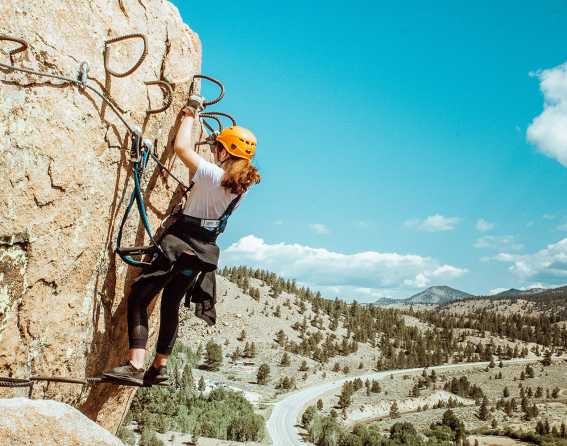
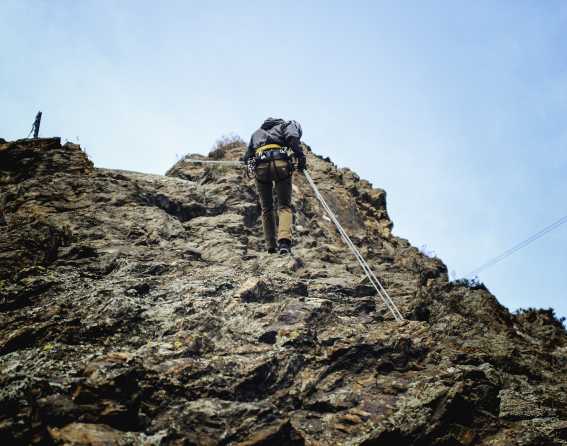
The Italian phrase, which loosely translates to “iron way,” refers to fixed routes of cables and rungs that allow thrill-seekers to safely navigate rock faces that would be otherwise accessible only to advanced climbers.
Via ferratas were originally built in the Alps during World War I by soldiers who needed to navigate the mountainous terrain. Today, Colorado’s recreational versions hook climbers to the fixed, thick cables via a special harness; a two-carabiner system allows them to move one carabiner at a time as they progress, meaning one is always secured to the cable as protection against a slip. (Though a misstep could mean you experience a short drop or swing.)
Access is typically limited to those 12 and older, and there are weight (and sometimes height) restrictions as well. Beyond that, tour operators say almost anyone can conquer a via ferrata, even those who have never rock climbed before. Those with the courage to do so can check out the various route options in Colorado’s mountains. Our advice: Don’t look down.
Mount Blue Sky Via Ferrata, Idaho Springs
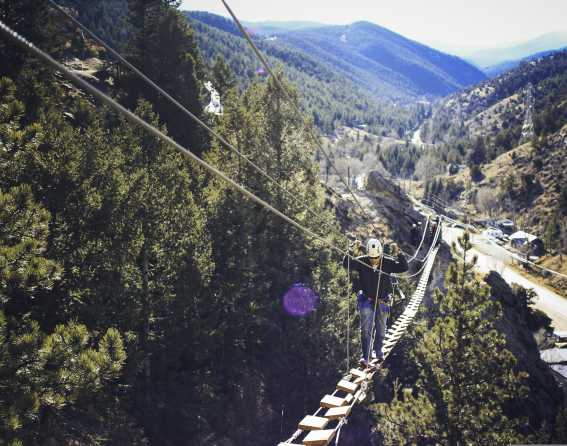
Typically, one of your goals on a via ferrata is not to fall (though you’ll be safe if you do). At AVA’s (Arkansas Valley Adventures) first via ferrata (the second is in Buena Vista; more on that below), falling is part of the experience. The guided route includes a 30-foot free fall — really, 10 feet before the auto-belay system kicks in. There’s also a rappel and a bridge crossing, plus stellar views over Chicago Creek. “We wanted to connect people to the outdoors in a way they haven’t before,” said marketing manager Jocelyn Criswell.
Time: 3 hours
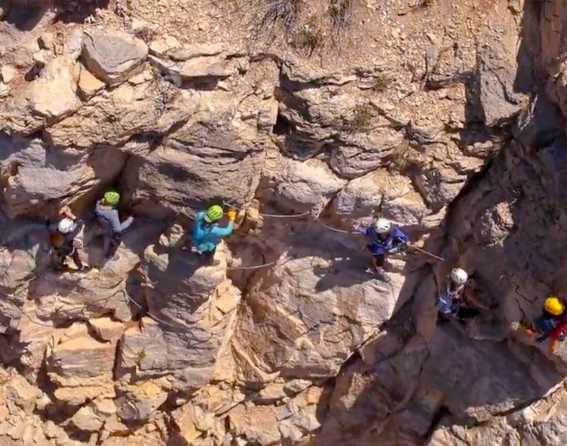
Cave of the Winds Mountain Park, Manitou Springs
Cave of the Winds, just outside Colorado Springs, has long been a destination for those wanting to explore the millions-of-years-old caves. But there’s plenty to do above ground, too — like conquering a perfect-for-beginners via ferrata. “We built it as an introduction to rock climbing,” said Outdoor Attractions Manager Chris Obert, one of the course’s designers. The route is only about a quarter-mile long, but it ends with a bang: Adventurers finish their tour with two lengthy ziplines and a 30-foot rappel back to terra firma. Along the guided, limestone path, climbers max out about 80 feet above the ground and traverse what Obert calls an “off-balance beam,” a wire rope walk, and a cargo net.
Time: 2–3 hours
Royal Gorge Via Ferrata, Cañon City
This via ferrata can be found at one of its most beloved landmarks: Royal Gorge Bridge & Park. The four, year-round routes — ranging from easy to difficult — feature a unique vertical climb design. Climbers hike down to the start of the routes, about 400 to 600 feet below the top of the gorge (yep, you’ll be looking up at the famed bridge), and work their way up the rock walls with the help of trained guides. Many of the site’s granite rocks date back to the Precambrian period. It’s “millions of years of geology we’re climbing up,” said Peggy Gair, human resources and public relations manager for the park.
Time: 2–5 hours
Granite Via Ferrata, Buena Vista
Last summer, AVA added its second guided via ferrata. While rock climbing experience isn’t necessary, Granite is more technical and exposed than the outfitter’s Idaho Springs location. To reach the start of the path — which sits above 300 feet off the ground — high-fliers must zipline above the Arkansas River. As they traverse the granite route, they’ll also have to rappel down rock faces and cross more than one suspended bridge.
Time: 3 hours
Telluride Via Ferrata, Telluride
If you think you’ve experienced Telluride’s box canyon before, think again. Colorado’s OG via ferrata started as a self-guided, at-your-own-risk adventure. While experienced climbers can still clip in to explore the two-mile path on their own, guided tours are also available. We suggest the latter as the route along the south-facing wall below Ajax Peak is the definition of exposed, leading climbers to stand above a 200-or-so-foot drop from the get-go. Telluride Mountain Club, which maintains the route, has plenty of advice and gear recommendations on its website.
Time: 4 hours
Gold Mountain Via Ferrata, Ouray
Experience the gorgeous San Juan Range. This via ferrata is located on Gold Mountain Ranch, which teamed up Basecamp Ouray Mountain Guides to offer a unique guided experience on private land. "As you navigate this awe-inspiring route, you’ll encounter more than just rock and steel — you’ll traverse portals into the past, cross bridges, and step into the heart of the San Juan Mountains. Each step along this path is designed to immerse you in the grandeur of nature’s masterpiece," according to the guides. There are guided and unguided options depending upon experience.
Time: 4–5 hours
Ouray Via Ferrata, Ouray
Here, you'll find two route options: Upstream (more challenging) and Downstream in the mesmerizing Uncompahgre Gorge. The Upstream route has 5,000 linear feet of cable-protected/rung-enhanced trail, a suspension bridge, a 60-foot "helix ladder" and a final "leap of faith." The original Downstream route has 4,000 lineal feet of cable-protected/rung-enhanced trail, a 35-foot-long cable bridge that goes across the gorge, and a "Sky Ladder" or "Sky Climb." Guides are recommended for inexperienced climbers.
Time: Depends on route choice and options
Royal Gorge Bridge & Park pictured above. Photos provided by the respective venues.