What are those dark, hulking, hump-backed beasts just off Interstate 70 on the way to Colorado’s ski country? Your eyes do not deceive you. There are indeed two to three dozen American bison roaming the grasslands that flank the highway at Genesee Park.

Whether you call our national mammal bison or buffalo (bison is the technically correct term!), there is no doubt the local herds in and around Denver — and across Colorado — are playing a significant role in restoring these iconic animals nationwide. 

A keystone species, bison were nearly exterminated in the 19th century when populations once estimated at 30 to 60 million were reduced to fewer than 500 total. Today there are major efforts to restore bison to their historic habitats, and although they will never occupy the open grassland in previous numbers, ecological recovery is progressing.  

The city’s conservation story begins in the last century. After the last wild bison in Colorado was killed, Denver — with one of the oldest conservation parks in the country — established a herd at the Denver Zoo in City Park. In 1914, the herd was moved to Genesee Park, where you can still spot them today. Learn more about Buffalo Herd Overlook and other places to see bison near Denver below.  

Note: Please respect the bison — they prefer peace and quiet. Do not climb the fences, feed, taunt or otherwise disturb the animals.

Buffalo Herd Overlook Bison

Located 20 miles west of Denver, Genesee Park is the largest of the Denver Mountain Parks with 2,413 acres of forests, meadows and panoramic views. Historic Chief Hosa Lodge, named after the Southern Arapaho Chief Little Raven, is located at the park, where visitors can hike, camp and picnic. Genesee Park was populated with bison in 1914 as a conservation effort. The first two members of the herd came from Denver Zoo Conservation Alliance. Soon after, park managers brought in a few animals from Yellowstone National Park’s herd — the last few remaining wild bison in the world. 

Today, the appearance of the Genesee Park bison, with their prominent shoulder humps (like those you might see on the back of a nickel), along with DNA testing, indicate that the herd is indeed a rare vestige of the original American bison. Their behavior shows few cattle traits (rare for bison), and they engage in what is regarded as ancient bison behavior: They’ll form a circle with bulls on the outside if a coyote approaches, and if one member of the herd is cut, the other members will roll in the blood, presumably so predators don’t know which among them is weakened. 

To reach Genesee Park, drive west on I-70 and take Exit 253 for the Chief Hosa Loop and I-70 bike path access or take Exit 254 to park at the Bison Meadow Trailhead. The half-mile Genesee Park American Bison Trail connects to the Genesee Mountain Trail and offers opportunities to view bison in the Middle Bison Pasture. Another option is to park at the Patrick House Trailhead and hike the Genesee Mountain Trail (3.6-mile loop), which passes between the Middle and South Bison Pastures.  

The Chief Hosa Loop (1.2 miles) also provides views of the Middle and South Bison pastures, located south of I-70. Bison may also be grazing in the North Bison Pasture, which can be accessed via the I-70 bike path. 

Daniels Park Bison

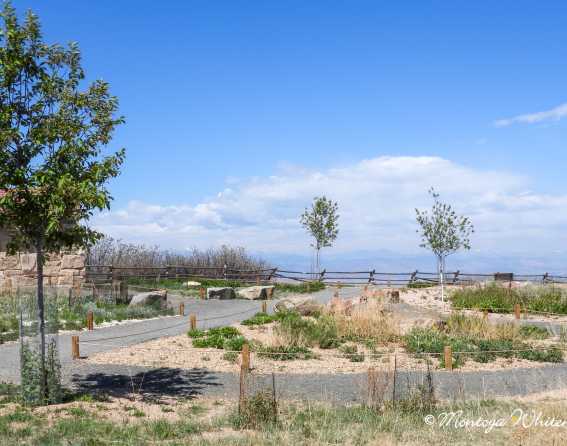
Denver’s bison herd expanded to Daniels Park in 1938. An integral part of the Denver Mountain Parks system, Daniels Park has more than 14,000 acres across four counties, with hiking trails and historic sites like Tall Bull Memorial Grounds and Medicine Wheel Garden (the park is listed on the National Register of Historic Places).  

Another highlight is the 100-mile panoramic view stretching from Pikes Peak to the Snowy Range in Wyoming. A 24-mile drive from downtown Denver, Daniels Park is a perfect destination for observing wildlife, picnicking and enjoying scenic open space. To get to Daniels Park from Denver, take I-25 South to Exit 188 for Castle Pines Parkway. Head west on Castle Pines Parkway for 4 miles until it turns into North Daniels Park Road, where you will find the entrance.
 

Rocky Mountain Arsenal National Wildlife Refuge Bison

Other places to view bison in the Denver area include the 15,000-acre Rocky Mountain Arsenal National Wildlife Refuge. The refuge offers a modern visitor center, an 11-mile Wildlife Drive to safely observe bison and other animals, and activities like hiking, biking, fishing and archery. It is a sanctuary for more than 330 species of animals like the endangered black-footed ferret. Managed by the U.S. Fish and Wildlife Service, the refuge is located 10 miles northeast of downtown Denver.
 

Laramie Foothills Bison Conservation Herd

Farther out, the Laramie Foothills Bison Conservation Herd is maintained through a partnership between Colorado State University, Larimer County and the City of Fort Collins at the Soapstone Prairie Natural Area, which spans 19,000 acres near the Colorado-Wyoming border. Genetically pure bison with a Yellowstone bloodline were reintroduced there in 2015. In 10 years nearly 200 bison have been rehomed to tribal, private and public conservation herds in 10 states. 

Increasing the Bison Range

Bison are moved when the capacity of the land to maintain the ecological health of the soil, water and vegetation is reached. They are then returned to landscapes where they have not been found for over 150 years.  

Beginning in 2021, the City and County of Denver ended what had been an annual bison auction, focusing instead on donations to tribal nations and organizations. So far, 13 different partners have benefited from donated surplus bison, including Wolf Springs Ranch in south central Colorado and tribal nations in Wyoming, Montana, Oklahoma, North Dakota and South Dakota. 

Bison are significant to Indigenous people who have relied on them for food, shelter, fuel, tools and ceremony. Nearly every part of the bison was used reflecting a relationship rooted in respect and reciprocity. For Plains Indigenous tribes in particular, bison are central to cultural, spiritual and economic life, and it is no surprise that tribes, tribal organizations and partners across North America are leading restoration efforts. Rematriating bison to tribal lands supports cultural revitalization while also advancing ecological restoration and creating long-term economic, environmental and health benefits for tribal citizens.  

In April 2026, the Denver City Council unanimously voted to permanently codify the donation of surplus bison to Indigenous tribes, strengthening a conservation program that began in 1914. Also in 2026, a Colorado law officially classified free-ranging bison as “big game” wildlife, establishing bison as both wildlife and livestock and setting a precedent for conservation in the United States. Now wild bison will receive legal protection that prevents poaching of herds that move from Utah into northwest Colorado.
 

Know Before You Go: Be Bison Savvy

Know the rules and regulations when visiting public spaces. Bison are wild animals and can be easily startled or stressed — do not approach bison! They are not friendly and can be extremely dangerous, so always observe bison quietly and respectfully. Do not climb the fences, feed, taunt or disturb the animals.  

These majestic mammals have key distinguishing features like a noticeable shoulder hump, cape lines, a thick pendulous beard, black horns, a thick head bonnet, chaps on the front legs, and a thin, short tail. In the spring they look shaggy as they shed their wooly winter coats. Adult males can weigh up to 1,600 pounds and females up to 1,200 pounds. Bison can live between 15 and 20 years in the wild and captivity. 

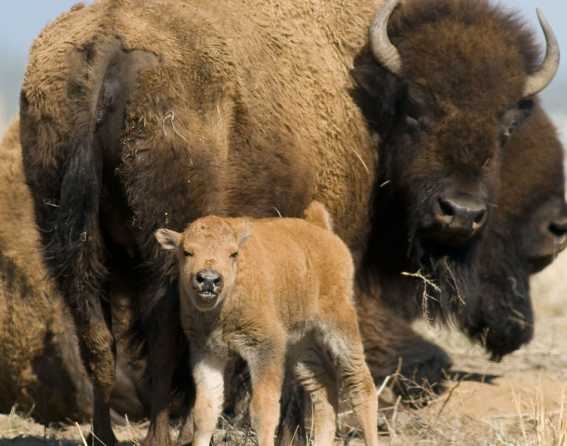
Bison calves are born in the spring and nicknamed, “red dogs” for their rusty-red or orange-brown coats. Calves weigh 30 to 70 pounds at birth and nurse for 7 or 8 months but begin grazing on grass within a week of birth. They can keep up with the herd just hours after birth. Calves are playful and you may see them showing off high kicks, running or sprinting. It is pure joy to glimpse red dogs randomly exhibiting bursts of energy (a.k.a. “zoomies!”).


Hero photo courtesy of Wikimedia Commons. Daniels Park photos courtesy of Montoya Whiteman.